

● Key Economic Indicators of Taiwan (Data released before July 10, 2025)
 GDP Economic Growth Rate (yoy) 3.14 (%) 2025 forecast |
 CPI Change Rate 1.37 (yoy, %) Jun. 2025 |
 Unemployment Rate 3.30 (%) May. 2025 |
 Monthly Regular Earnings of All Employees (Industry and Services) 47,807 (NT dollars) April. 2025 |
- In June 2025, the Consumer Price Index (CPI) increased by 0.14% compared to the previous month. After seasonal adjustment, it rose by 0.01%. Compared to the same month in 2024, it rose by 1.37%. On average, from January to June, the CPI increased by 1.93% compared to the same period last year.
The Producer Price Index (PPI) in June decreased by 1.03% compared to the previous month and dropped by 5.47% compared to the same month last year. On average, from January to June, the PPI increased by 0.27% compared to the same period last year. - The number of employed persons in May was 11.611 million, an increase of 6,000 (0.05%) compared to the previous month. The number of unemployed persons was 396,000, a decrease of 3,000 (-0.72%) compared to the previous month. In May, the number of people not in the labor force was 8.242 million, a decrease of 7,000 (or 0.09%) compared to the previous month. The labor force participation rate in May was 59.30%, and increase of 0.03 percentage points from the previous month. The unemployment rate in May was 3.30%, and the seasonally adjusted unemployment rate was 3.34%, both down by 0.02 percentage points from the previous month.
- In April 2025, the average regular earnings of all employed persons (including full-time and part-time employees of both domestic and foreign nationality) was NT$47,807, representing a monthly increase of 0.58% and an annual increase of 3.22%. Non-regular earnings, including bonuses and overtime pay, averaged NT$7,739, bringing the total average earnings to NT$55,546, a monthly increase of 0.84% and an annual increase of 3.30%. The median regular earnings stood at NT$38,208, showing a monthly increase of 0.24% and an annual increase of 3.05%.
Source: National Statistics, Republic of China (Taiwan)
● Statistics on Republic of China Nationals Traveling Abroad
| Outbound departures of nations in January – April 2025 5,967,561 |
| Year on Year +11.7% |
| Outbound departures of nations in April 2025 1,475,009 |
| Month on Month +0.8% |
Number of Trips and Growth Rate of Republic of China Nationals Traveling Abroad in March 2025 and from January to April 2025 –By Destination

Source: Ministry of the Interior, Immigration Office (Republic of China)
Note: The outbound travel data for Republic of China nationals is based on the principle of counting the first destination reached by flight. Additionally, factors such as irregular chartered flight itineraries are included. Therefore, for the actual data on Taiwanese nationals traveling to specific countries, please refer to the official inbound statistics published by each destination country.
● Passenger Numbers of Cruise Ships at International Commercial Ports in the Taiwan Region
| Outbound departures of nations in January – May 2025 427,754 |
| Year on Year +142.1% |
| Outbound departures of nations in May 2025 83,826 |
| Month on Month -65.6% |
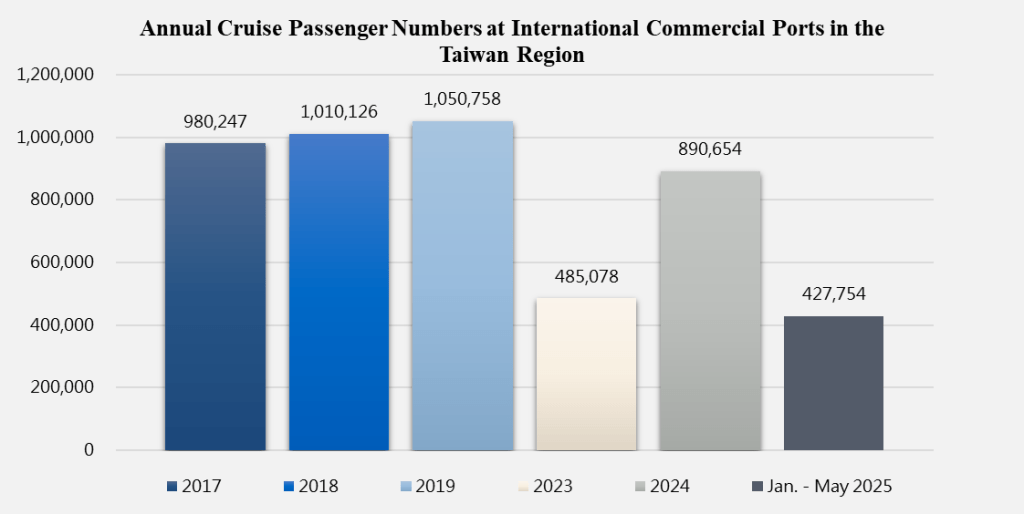

ource: Taiwan International Ports Corporation, compiled
based on passenger entry and exit numbers reported by each port branch company
● International Cruise Companies and Cruise Ships Stationed in Taiwan in 2025
| Affiliated Cruise Companies | Cruise Ships Operating in Taiwan | Tonnage | Passenger Capacity | Home Port in Taiwan |
| Costa Cruises | Costa Serena | 114,500 | 3,780 | Keelung Port/Kaohsiung Port |
| MSC Cruises | MSC Bellissima | 172,000 | 5,686 | Keelung Port |
| Norwegian Cruise Line | Norwegian Spirit | 75,338 | 2,018 | Keelung Port |
| Star Cruises | Star Navigator | 75,338 | 1,856 | Keelung Port |

Latest Voyage Statistics of International Cruise Companies in Taiwan from 2023 to 2025

Analysis of Online Buzz Around South Korea’s Four Most Popular Travel Cities

Online Buzz Analysis of the Four Most Popular Tourist Attractions in South Korea
● Overview

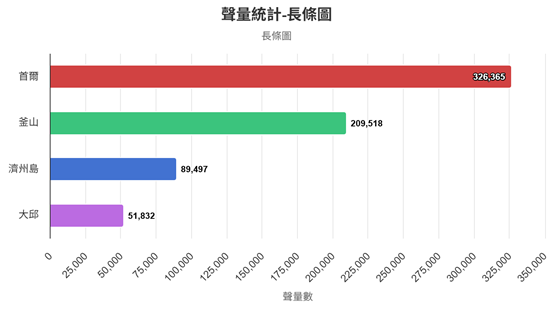
Observation Period: June 01, 2024 – May 31, 2025
Sources: Discussion forums, social media, news, blogs
Note: This online insight analysis is based on data from the OpView Social Media Database and reflects the number of online discussions related to the “four most popular cities in South Korea.”
According to statistics from the OpView social media opinion database, Seoul firmly holds the top spot among popular South Korean travel destinations, accounting for 48.2% of online mentions. With over 320,000 related mentions during the observation period –nearly half of the total volume –Seoul remains the most-discussed city in Korea travel conversations. As the nation’s capital and a cultural and trendsetting hub, it continues to be the top choice for Taiwanese travelers planning a trip to South Korea. Whether it’s visiting K-drama filming locations, supporting favorite celebrities, or indulging in shopping, beauty, and food experiences, Seoul fulfills almost every travel desire, maintaining its high popularity across online communities for years.
Coming in second is Busan with 30.9% of mentions, totaling over 200,000 mentions. As a port city known for its ocean views, seafood, and the Busan International Film Festival, Busan holds undeniable appeal in travel discussions. While its online buzz is not as overwhelming as Seoul’s, it still captures over 30% of the share. Many influencers and independent travelers share Busan’s unique charm online, making it a popular “second visit” option for those who have already been to Seoul.
In contrast, Jeju Island and Daegu account for only 13.2% and 7.7% of the mentions respectively –roughly one-tenth and less than one-tenth of the total. Jeju, while known for its natural beauty, presents higher travel barriers for independent travelers due to limited direct flights and relatively inconvenient transportation on the island. Daegu, on the other hand, has seen noticeable visitor growth in recent years thanks to the increase in direct flights. It’s emerging as a new option for travelers looking to explore beyond South Korea’s capital region. However, based on online mentions, overall discussion about Daegu remains limited, indicating that its popularity and recognition as a tourist destination still have room to grow.
● Insights on Sources of Online Mentions
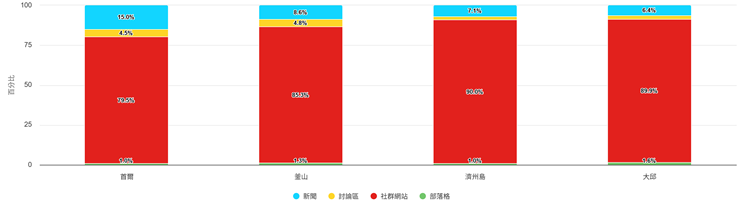
- Social media:
Social media is by far the dominant source of online mentions, accounting for over 79% of the volume across all four cities. Jeju Island (90.0%) and Daegu (89.9%) had the highest concentration of mentions from social platforms, followed by Busan (85.3%) and Seoul (79.5%). Among them, short videos on Instagram Reels featuring budget-friendly accommodations in Seoul’s Myeong-dong sparked widespread discussion. Popular posts mainly revolved around travel tips, covering topics such as lodging, transportation, beauty products, and promotional deals. YouTube videos also drove significant buzz –for instance, a video by YouTuber “見習網美小吳” about a NT$10,000 shopping spree in Busan amassed 520,000 views and over 9,700 comments. - News media:
Seoul had the highest share of news-based mentions at 15.0%, significantly higher than Busan (8.6%), Jeju Island (7.1%), and Daegu (6.4%). This reflects Seoul’s status as the capital and a major tourism hub, leading to stronger media exposure. Related news topics include travel policies, seasonal events (such as cherry blossoms or snowy landscapes), major performances, and K-pop idol activities –all contributing to increased media visibility. - Forum:
Forum mentions were relatively evenly distributed among the four cities, with Busan slightly leading at 4.8%. These posts mostly appear on platforms like PTT and Dcard, where users share practical travel advice, ask questions about itineraries and transportation, or offer accommodation recommendations. This category is generally more function-oriented and question-driven. - Blogs:
Mentions from blogs were the lowest overall, with Daegu leading at 1.6%, followed by Busan (1.3%), and Seoul and Jeju Island both at 1.0%. With the rise of short-form, real-time social media content, long-form blog posts have declined in prominence. However, for lesser-known or logistically complex destinations like Daegu, blogs still maintain a niche but meaningful presence in online travel discussions.
● Sentiment Analysis of Online Discussions

- Seoul, as the capital and the most iconic tourist city in South Korea, had the highest volume of online mentions among the four cities. According to the data, it received 93,616 positive mentions and 18,601 negative mentions, resulting in a positive-to-negative sentiment ratio of 5.03, indicating an overall positive tone. Netizens praised Seoul for its shopping, cuisine, K-culture, and convenient transportation.
- Busan demonstrated the most favorable online sentiment, with 70,681 positive mentions and only 11,636 negative mentions, giving it the highest positive-to-negative ratio of 6.07 among all cities. Busan’s seaside attractions and rich local culture have helped it establish a strong and positive image as a travel destination.
- Jeju Island, known for its natural landscapes and resort-like atmosphere, also showed a positive trend in online discussions. It recorded 22,805 positive mentions and 3,948 negative mentions, with a sentiment ratio of 5.16. Most users gave favorable reviews of Jeju’s scenic beauty, slow-paced lifestyle, and unique local attractions.
- Daegu, though having the lowest overall discussion volume, still displayed a solid reputation online. It had 12,786 positive mentions and 2,508 negative mentions, resulting in a sentiment ratio of 5.1. As a city with deep cultural roots, historic landmarks, and local festivals, Daegu, while more niche, maintains a consistently positive travel image.
● Gender Ratio and Interest Tags
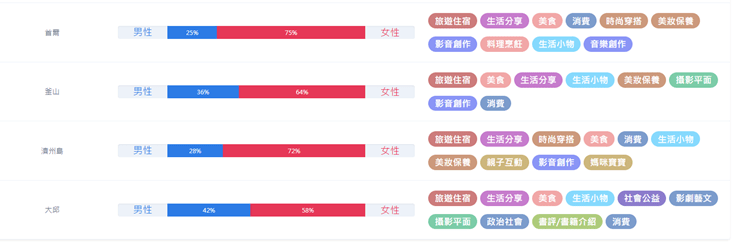
- Seoul’s online mentions show a clear female-dominated pattern, with 75% from female users and 25% from male users. The most common interest tags include “travel & accommodation,” “food,” “shopping,” and “lifestyle sharing,” reflecting a tendency among female users to share travel experiences, daily life, and consumer insights. Other prominent tags include “fashion & styling,” “cooking,” and “music creation,” suggesting a content landscape that is lifestyle-oriented and emotionally expressive.
- Busan exhibits a more balanced gender distribution, with 64% female and 36% male. Like Seoul, its top tags are centered on “travel & accommodation,” “food,” and “lifestyle sharing.” Notably, tags such as “photography” and “video production” also appear, highlighting Busan’s appeal to users interested in visual arts and creative content. As a destination that combines coastal scenery and urban charm, Busan draws a broad range of attention across gender lines and content types.
- Jeju Island has a gender distribution similar to Seoul’s, with 72% female and 28% male. Its interest tags strongly lean toward family and lifestyle themes. In addition to travel-related tags, there is significant mention of “parent-child activities” and “mom & baby” topics. This suggests that Jeju is especially popular among women and families, with discussions often focusing on comfortable, relaxing, and family-friendly travel experiences.
- Daegu stands out as the city with the most balanced gender ratio, with 42% male and 58% female. Besides common travel-related topics, discussions also feature public and cultural themes such as “social welfare,” “film & arts,” “politics & society,” and “book reviews.” This diverse tag profile indicates that Daegu attracts a broader range of interests in online discussions –not only offering practical travel information, but also fostering cultural reflection and social engagement, drawing more knowledge-seeking and rationally oriented users into the conversation.
● Insights from Keyword Clouds –Top 4 Popular Travel Destinations in South Korea
★ Seoul travel –keyword cloud

Key trends:
1.Independent travel to Korea is popular, with Seoul as the core destination
Keywords such as “Korea,” “Seoul,” “itinerary,” “attractions,” and “city” indicate that most travelers prefer independent travel when visiting Korea, with Seoul remaining the central hub for tourism.
2.Food experiences are a major focus –cafés and specialty restaurants are highly favored
Terms like “food,” “travelers,” “cafés,” “specialty,” and “restaurants” highlight the importance of dining and culinary experiences in travel planning, showcasing the strong appeal of Korean food culture.
3.Diverse cities and nearby attractions are popular extensions to Seoul trips
In addition to Seoul, place names such as “Busan,” “Jeju Island,” and “Nami Island” appear frequently, suggesting that travelers often plan multi-city itineraries to explore more local and regional destinations across Korea.
★ Busan travel –keyword cloud

Key trends:
1.Busan emerges as a popular destination for independent travelers, with strong focus on itinerary planning
Busan has become one of the top cities in South Korea for independent travel. Keywords such as “itinerary,” “attractions,” “independent travel,” and “travelers” reappear here, as they did for Seoul, indicating that visitors prefer a flexible, in-depth exploration style when visiting Busan as well.
2.High interest in food –local cuisine and cafés in the spotlight
Keywords like “food,” “cafés,” “restaurants,” “breakfast,” and “dinner” stand out once again. Similar to Seoul, culinary experiences remain a major attraction, with Busan’s seafood, local street food, and trendy cafés drawing strong attention from tourists.
3.Multi-city and nearby excursions expand travel horizons –new emerging destinations gaining popularity
Terms such as “Gyeongju,” “Songdo,” “ocean view,” “nearby,” and “day trip” appear in the keyword cloud, suggesting that many travelers extend their trips from Busan to surrounding areas, combining cultural, natural, and coastal attractions into a broader travel experience.
★ Jeju Island travel –keyword cloud

Key trends:
1.Rising attention toward Jeju Island, with itinerary planning remaining a core focus
Keywords such as “Jeju Island,” “itinerary,” “independent travel,” “trip,” and “attractions” appear frequently, indicating that Jeju has become a popular and standalone travel destination in South Korea. Travelers tend to favor flexible, self-guided itineraries.
2.Natural scenery and iconic sights are key attractions
The presence of keywords like “scenery,” “landscape,” “Seongsan Sunrise Peak,” “ocean view,” “view,” and “sightseeing” reflects the island’s strong appeal through its natural beauty and landmark attractions, which are major points of interest for visitors.
3.Growth in family-friendly, themed, and in-depth travel experiences
Keywords such as “family travel,” “themed,” “exclusive,” “special,” “ambience,” and “in-depth” suggest that tourism in Jeju is evolving beyond basic sightseeing, moving toward diverse and segmented experiences, including family-oriented trips, Instagrammable photo spots, and cultural immersion.
★ Daegu travel –keyword cloud

Key trends:
1.“Daegu” remains a core keyword, but “Seoul” and “Busan” appear more frequently
In this keyword cloud centered on Daegu travel, users often mention “Seoul” and “Busan” even more than Daegu itself. This suggests that travelers tend to treat Daegu as a supplementary destination within broader itineraries focused on Seoul or Busan. It highlights Daegu’s relatively weak position in international tourism, where it has yet to establish a distinct identity as a standalone travel destination.
2.Strong demand for day trips and nearby explorations
Keywords like “day trip,” “nearby,” “suburb,” “bus,” “Haeundae,” “Gyeongju,” and “train” indicate that users frequently plan short excursions from Daegu, exploring surrounding cities or attractions via public transport or guided tours.
3.Rising interest in traditional cultural experiences
Terms such as “hanbok,” “K-dramas,” “specialty,” “theme,” “photo,” and “travel photography” reflect growing attention toward cultural and photogenic experiences in Daegu. Many independent travelers may be drawn to the city by drama filming locations, traditional Korean culture, or local festivals, seeking immersive and experiential travel.

1. Summer Travel Surge Begins! Hokkaido Group Tours Cheaper Than Flights Alone; Australia and New Zealand Emerge as Dark Horses with 50% Spike in Bookings
As the peak summer travel season approaches, data from ezTravel indicates that geopolitical tensions and tariff concerns have led consumers to adopt a more cautious attitude toward booking overseas group tours. Compared to previous years, bookings have been delayed, although overall demand remains strong. In the past week, group tour sales have rebounded, showing a 25% increase.
/ Expand full text /
According to ezTravel’s observations, ample flight availability and diverse destinations have driven down tour package prices. For example, group tour prices to Japan have dropped by 15–20%, with some Hokkaido packages starting as low as NT$20,888 per person (tax included) –even cheaper than purchasing airfare alone. The market is also seeing a shift in preferred destinations. Due to concerns over geopolitical risks, more travelers are choosing safe and stable countries in the Southern Hemisphere for their summer vacations. According to ezTravel, group tour bookings to Australia and New Zealand have surged by 50% compared to the same period last year, making the region this summer’s unexpected rising star.
2. Philippines Grants Visa-Free Entry to Taiwanese Travelers for 14 Days Starting July 1; MOFA: A Boost to Bilateral Exchange and Cooperation
The Manila Economic and Cultural Office, the de facto Philippine representative office in Taiwan, announced on its official website that starting July 1, 2025, holders of Taiwanese passports traveling to the Philippines for tourism purposes will be eligible for 14-day visa-free entry. This stay cannot be extended and may not be converted to another visa category.
/ Expand full text /
The Ministry of Foreign Affairs (MOFA) of Taiwan stated that on June 13, Minister Joseph Wu (林佳龍) attended the Philippine Independence Day reception, where he announced on behalf of the government the extension of Taiwan’s one-year visa-free policy for Philippine nationals.
In return, the Philippines has adopted a reciprocal arrangement, granting visa-free access to Taiwanese passport holders. MOFA noted that this move will help strengthen bilateral exchange and cooperation, particularly in the fields of trade, investment, and tourism.
3. Star Voyager Makes First Call at Kaohsiung, Ushering in a New Wave of Cruise Tourism
With over 30 years of cruise operation experience, StarDream Cruises has officially launched its dual-homeport strategy in northern and southern Taiwan, aiming to establish the most comprehensive cruise route network in the country. On June 30, the Star Voyager made its maiden call at the Port of Kaohsiung, marking the start of Kaohsiung’s summer cruise season.
/ Expand full text /
Departing from Hong Kong, the Star Voyager is scheduled to operate 45 round-trip sailings from now until November 14, 2025. These itineraries will range from 2 to 5 nights and connect various popular destinations across East and Northeast Asia. Of these sailings, 12 will call at Taiwanese ports including Kaohsiung, Keelung, and Penghu. Each call is expected to generate more than NT$5 million in local economic benefits.
4. Top 100 Airlines of 2025 Announced: EVA Air and China Airlines Make the List
UK-based airline rating agency Skytrax has recently released its World’s Top 100 Airlines 2025 rankings, with Qatar Airways claiming the top spot once again, maintaining its title as the world’s best airline. Following closely are Singapore Airlines and Cathay Pacific (00293-HK), the latter making a significant jump to third place. Notably, China’s Hainan Airlines also broke into the top ten for the first time, highlighting the strong competitiveness of Asian carriers.
/ Expand full text /
Asian airlines stood out among the global top ten for 2025, with Qatar Airways, Singapore Airlines, Cathay Pacific, and Hainan Airlines all securing spots in the top ranks. This reflects the steadily improving service quality in the Asian aviation market and reinforces its growing influence in the global airline industry.
5. Tigerair Taiwan Launches Kaohsiung–Jeju Direct Flights, Linking Taiwan’s North, Central, and South to Korea with 13 Weekly Flights
On June 30, Tigerair Taiwan held a launch ceremony at Kaohsiung International Airport for its new direct route between Kaohsiung and Jeju, marking a new chapter in Taiwan–Korea tourism exchanges. This new route is the airline’s 11th departing from Kaohsiung and its second direct service to South Korea, following the Kaohsiung–Gimpo route. Initially operating four flights per week, the new service –combined with routes from Taoyuan and Taichung –will bring the total number of weekly flights between Taiwan and Jeju to 13, significantly enhancing travel convenience for southern Taiwan residents.
/ Expand full text /
As the only Taiwanese airline offering direct Jeju flights from northern, central, and southern Taiwan, Tigerair Taiwan now operates a wide network of routes to destinations including Japan, South Korea, Thailand, Vietnam, and Macau –providing travelers with flexible and diverse travel options. For more flight schedules and promotional offers, visit the Tigerair Taiwan website or follow their social media platforms.
※CheeseAd is an advertising agency specializing in serving clients in the tourism industry. To better understand the current state of tourism in Taiwan for our foreign clients, we have selected news or information from your platform. If you have any comments regarding the above excerpts, please feel free to contact us. Thank you!

Key summary
- Artificial Intelligence (AI) advertising refers to the use of AI technologies to automate and optimize the buying, selling, placement, and personalization of ads for specific target audiences.
- Advances in AI technology have enabled advertisers to automate the planning and purchasing processes of advertising campaigns.
- Surveys showed that 67% of marketers believe creativity is the key to competitive advantage.
- Even with human-guided optimization, AI models may still face challenges when evaluating ads that are innovative or unconventional.
● When Advertising Meets AI –The Marketing Battlefield is Being Redefined!
★ What is AI advertising?
Artificial Intelligence (AI) advertising refers to the use of AI technologies to automate and optimize the buying, selling, placement, and personalization of ads for specific target audiences. This innovative approach enhances marketing campaigns by analyzing consumer data related to audience preferences and online behavior, enabling the delivery of highly relevant ads to each individual –ultimately boosting marketing effectiveness.
★ The AI revolution in advertising
The advertising and media industries are undergoing a major revolution –one where content can be created, adjusted, and published almost instantly.
This presents a great opportunity for marketers and ad agencies to connect more efficiently with target consumers, promote products and services, and grow their market share. At the same time, they face the challenge of producing and delivering large volumes of content across multiple media platforms within tight timeframes, all while maintaining a consistent brand voice.
At the heart of this revolution are the opportunities brought by AI, especially the rise of generative AI. These model-driven machines can produce text, audio, images, and videos in response to human prompts. Take social media tools as an example: marketers can now create, adapt, and reformat ad copy and videos with ease –saving substantial manpower and boosting productivity.
Source: Ipsos
益普索觀點 — 廣告研究中的人工智慧:人性化 AI 激發創意與品牌成功
● From Efficiency to Risk: How AI is Reshaping the Rules of Advertising
★ The profound impact of AI on digital advertising
Advancements in AI technology have enabled advertisers to automate the planning and purchasing processes of digital ads. These AI tools allow advertisers to set parameters such as budget limits and sales targets, then let algorithms determine ad placement, target audience, and even presentation style. Tools like Google’s Performance Max and Meta’s Advantage+ are now widely used in advertising campaigns. Their main advantage lies in enhancing the efficiency and effectiveness of ads. Many advertisers have reported improved click-through and conversion rates after adopting AI tools.
For example, baby product brand Lalo saw increased sales after using Google’s Performance Max campaigns. Nicole Fisch, Senior VP of Marketing, noted: “The data showed that this truly leads to better conversion results.”
AI technology is reshaping the digital advertising industry in multiple ways:
- Ad placement strategy: AI tools can automatically optimize ad placement strategies based on massive datasets, enabling precise targeting and improved performance. However, this also requires advertisers to place trust in algorithmic decisions, which may lead to a loss of control over campaign details.
- SEO optimization: AI can analyze user behavior and search trends to help businesses improve website content and boost search engine rankings. Yet, excessive reliance on AI may result in generic content that lacks originality.
- Content creation: Generative AI can automatically create ad copy and designs, reducing labor costs. However, AI-generated content may lack human warmth and emotional resonance, which could negatively impact brand perception.

Source: KPN
人工智慧在數位廣告中的影響與未來趨勢
● When AI Meets the Limits of Creativity –Can Machines Grasp the Soul of Advertising?
★ Risks to creativity and effectiveness?
In the advertising world, creativity is often a subject of debate, with differing views on its value and impact. According to a survey, 67% of marketers believe creativity is the key to competitive advantage, yet only 12% feel confident convincing their CFOs to allocate more time, budget, and resources toward developing more effective creative advertising.

The rise of generative AI allows machines to create text, audio, images, and video under human guidance, significantly saving labor and increasing productivity. Meanwhile, analytical AI models trained on datasets of human responses can predict how new ads might resonate with audiences, forming an almost real-time, high-efficiency ad cycle that spans creation, measurement, selection, and optimization –evaluating even those ad variations that might not otherwise receive research investment.
However, this pursuit of AI-driven productivity poses risks to the core values of the advertisements we know and love. While AI tools can certainly boost efficiency, they may also compromise creativity –potentially affecting both sales performance and market share.
Even with human-led refinement, AI models still struggle to evaluate ads that are innovative or unconventional, since such campaigns often rely on empathetic experiences and imaginative thinking –qualities that remain difficult for machines to fully comprehend.
Source: Ipsos
益普索觀點 — 廣告研究中的人工智慧:人性化 AI 激發創意與品牌成功
★ AI isn’t the endgame –human insight remains essential in advertising
A new survey reveals that consumer trust in AI-driven marketing remains low, and this skepticism could negatively impact brand perception.
According to a June 2024 survey by Tinuiti of 1,000 U.S. adults, 40% of Gen Z and 42% of Baby Boomers (born between 1946 and 1964) said that brands using AI-generated content seem like scams.
Additionally, 65% of consumers feel uneasy about AI-generated ads, yet at the same time, they believe brands will eventually adopt AI across the board.
This highlights a paradox: while consumers are skeptical about AI-generated content, they also see AI’s integration into marketing as inevitable. So how should brands respond to this contradiction?
Striking a balance between AI innovation and transparent brand strategy will be a crucial task for marketers moving forward –ensuring AI serves as a tool, not a replacement, in building meaningful consumer relationships.
Source: Business Next
65% 消費者對 AI 廣告不安!3 大行銷策略協助品牌取得消費者信任

Wok Hei –The Deciding Factor in Authentic Cantonese Cuisine
Whether a Cantonese dish passes the test often comes down to one thing: wok hei, the “breath of the wok.” This unique flavor can only be achieved by cooking with a traditional iron wok. It is the heart and soul of Cantonese cooking.
When the flame is at its highest and ingredients are stir-fried rapidly in the iron wok, the sudden surge in temperature creates that signature wok hei. Stir-frying is all about capturing that precise moment.
In Cantonese cuisine, the secret behind dishes that are visually appealing, aromatic, and flavorful lies in this very wok hei. Whether it’s a fine Cantonese restaurant or a traditional street-side stir-fry stall, wok hei is widely regarded as the ultimate mark of great culinary skill and outstanding food.
Concept Idea:
Hong Kong is a melting pot of global flavors, offering a rich diversity of culinary experiences –from dim sum and street-side stir-fries to Michelin-starred Cantonese fare. Wandering through its bustling streets and alleyways, one thing remains constant: the pursuit of that authentic wok hei. No matter where you are –Taiwan or elsewhere –it’s hard to find the true taste of Hong Kong’s wok hei.
Iconic stir-fried dishes like Beef Chow Fun, Typhoon Shelter Crab, Salt and Pepper Squid, Clams with Black Bean Sauce, and Sweet and Sour Pork showcase the bold, smoky flavors only Hong Kong can deliver. That’s why we invite food lovers who crave the true taste of Hong Kong to drop everything and take a spontaneous culinary trip to the city.
“Satisfy Your Cravings in Hong Kong –Fly Now for the Ultimate Wok Hei Experience!”
Campaign website:
Pair each wok hei dish with steamy animations to make visitors feel as if they can smell the irresistible aromas through the screen.
https://cxgourmetpromotion.discoverhongkong.com/tc/

Hong Kong wok hei food highlights

The ultimate guide to Hong Kong wok hei delicacies

Cathay Pacific lounge dining guide
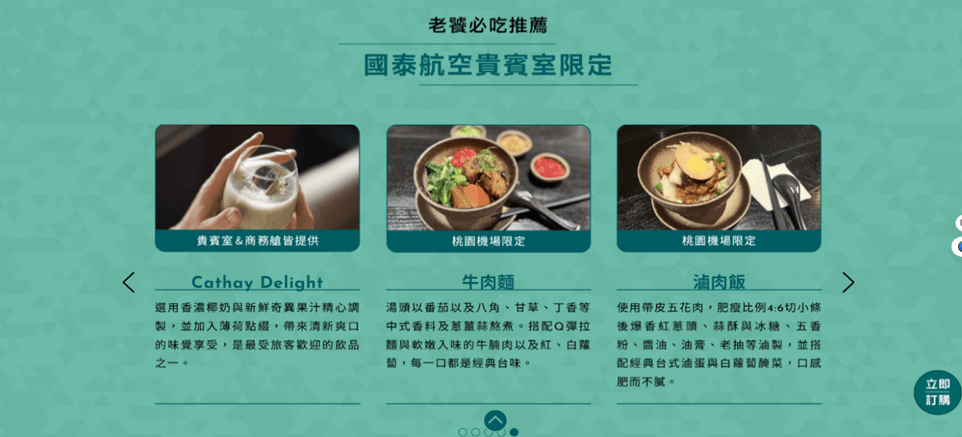
Feature collaboration with lifestyle magazines –On-site reports from Hong Kong’s wok hei hotspots
https://www.discoverhongkong.com/content/dam/dhk/intl/plan/traveller-info/e-guidebooks/HK-Local-cuisine-tc.pdf
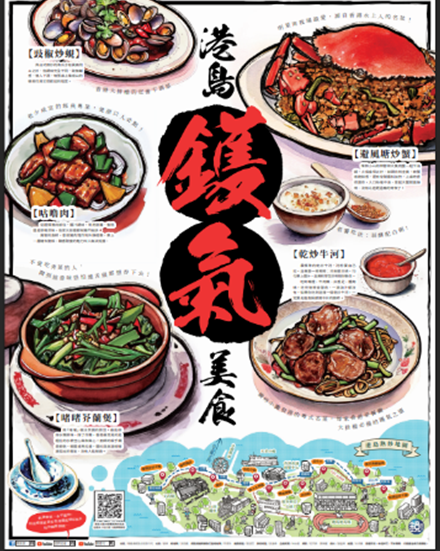
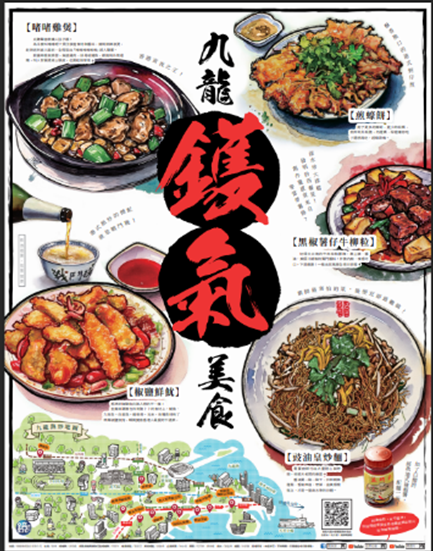
Top 10 wok hei restaurants in Kowloon
https://www.mirrormedia.mg/story/20250616food021
Top 10 wok hei restaurants on Hong Kong Island
https://www.mirrormedia.mg/story/20250616food022
Premium ad placement for an immersive wok hei culinary experience

 啟示整合行銷